New Braunfels AC Emergency & Repair Cost Guide
A practical emergency AC guide for New Braunfels heat: what is safe to check, what information to gather before calling, cost ranges, and renter-safe documentation steps.
Use this guide before the call
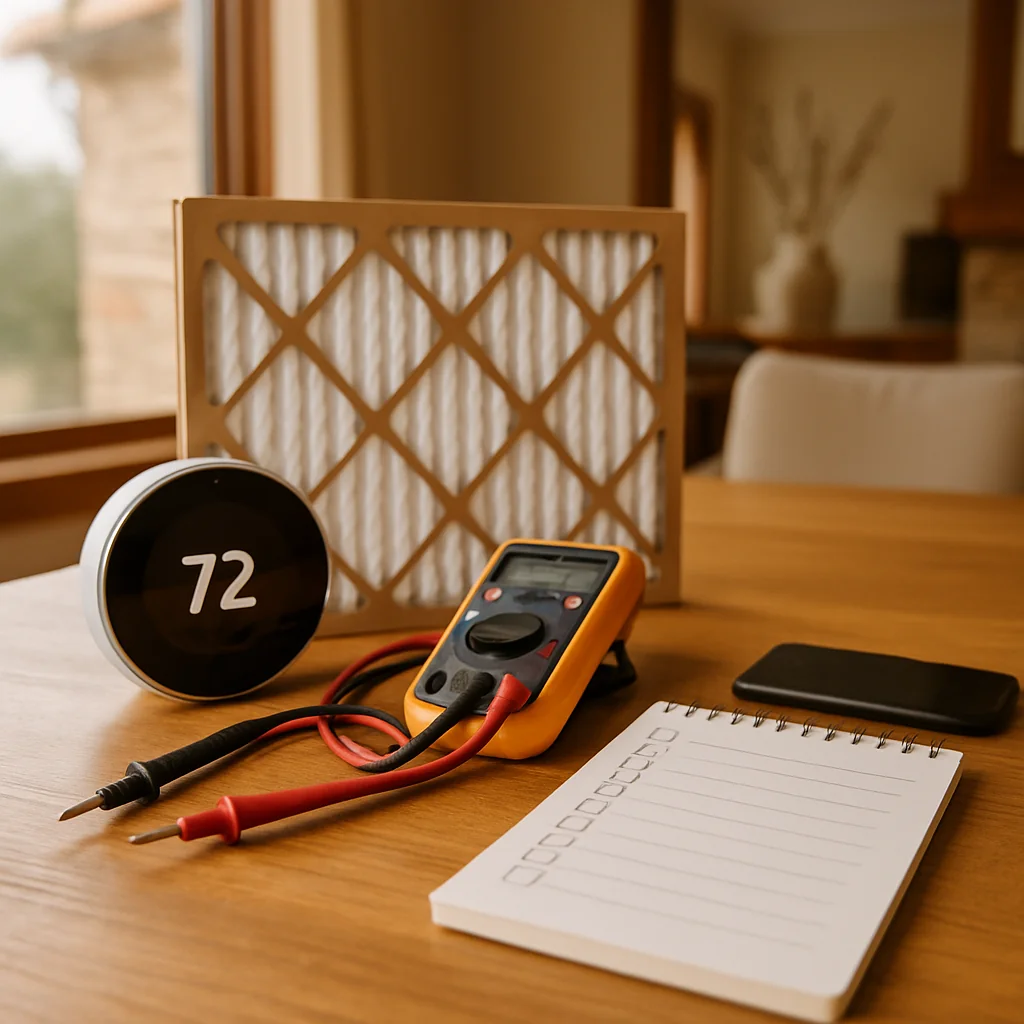
If the AC is out during a New Braunfels summer afternoon, the first goal is safety and triage. Do the checks that do not require opening equipment, gather the information a technician will ask for, then call with a clear description. That helps dispatch decide whether the job is a true emergency, whether a common part is likely, and which technician is best equipped for the first visit.
Download homeowner checklist PDF Download renter checklist PDF
Emergency AC triage
- Call immediately if you smell burning, smell gas near a furnace or gas package unit, see smoke, hear electrical arcing, or the breaker trips again after one reset.
- Turn the system off if you see ice on the indoor coil, ice on the copper refrigerant line, water around the air handler, or repeated short-cycling.
- Keep people safe if the house is getting hot. Elderly residents, infants, and medically heat-sensitive residents should be mentioned at the start of the call.
- Use fans and shade while waiting, but do not run the AC with visible ice or a repeatedly tripping breaker.
What to check before calling
- Thermostat: set to COOL, fan on AUTO, target temperature at least 3 degrees below room temperature, and screen powered.
- Filter: pull the return filter. If it is clogged, replace it. A blocked filter can freeze the coil and make the AC stop cooling.
- Breaker: check the labeled HVAC or AC breaker once. Reset only one time. If it trips again, stop.
- Outdoor unit: while the thermostat is calling for cooling, look at the condenser. Note whether the fan is spinning, whether it hums, or whether it is silent.
- Ice or water: look for frost on copper lines or water around the indoor air handler. If either is present, turn cooling off and let the system thaw.
Information that helps the contractor estimate
Have these notes ready if you can gather them safely:
- Outdoor unit brand, model number, serial number, and approximate age.
- Indoor unit location: attic, closet, garage, crawlspace, or mechanical room.
- Filter size and condition, plus when it was last changed.
- Thermostat photo showing mode and indoor temperature.
- Whether air is blowing warm, weak, not at all, or only at some vents.
- Whether the outdoor unit is humming, clicking, rattling, silent, or running normally.
- Recent maintenance, refrigerant recharge, capacitor replacement, thermostat replacement, or electrical work.
- Photos of visible ice, water, tripped breaker labels, equipment data plates, and prior invoices.
This is not busywork. Model numbers help identify tonnage and parts. Filter and ice notes help separate airflow problems from refrigerant or component failures. Symptom timing helps tell a failed capacitor from a frozen coil or compressor issue.
Likely cost ranges
Actual pricing depends on access, equipment, part availability, after-hours dispatch, and whether the system has a larger failure. These ranges are useful for triage, not a quote.
- Diagnostic visit: commonly a flat service-call or diagnostic fee, quoted before dispatch.
- Capacitor or contactor: usually one of the lower-cost AC repairs when the system is otherwise healthy.
- Thermostat or control wiring: moderate cost, depending on wire access and thermostat type.
- Refrigerant leak or recharge: cost varies widely by refrigerant type, leak location, and amount needed.
- Fan motor or blower motor: higher than simple electrical parts, especially after-hours.
- Compressor failure: often triggers a repair-versus-replace conversation, especially on a 10+ year old unit.
Repair or replace decision
The fastest rule: repair a younger system with one isolated failure; compare repair and replacement on a 10-12 year old system; seriously consider replacement on a 12+ year old system with a major refrigerant, compressor, or repeated electrical failure. New Braunfels heat makes reliability matter because an undersized or aging system runs hard for long stretches.
For a deeper decision framework, see AC Repair vs Replace: How to Decide.
Renter checklist
Renters should focus on documentation and lease-safe checks. Photograph the thermostat, write down the indoor temperature and when the issue started, note whether water or ice is visible, and tell the landlord or property manager whether the home is still cooling at all. Do not open equipment panels, add refrigerant, reset breakers repeatedly, or modify wiring. Use the renter PDF above to send a concise, useful report.
Need AC help in New Braunfels? (830) 433-5089. Phone is fastest for emergency cooling failures.